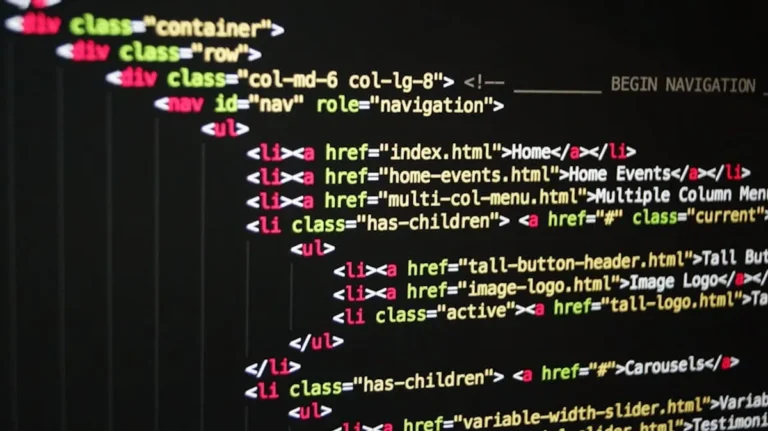

Developing web applications requires foresight beyond initial functionality. The true cost and longevity of a web application are determined not just by its launch, but by its ongoing maintainability. This encompasses the ease with which new features can be added, bugs can be fixed, and new developers can onboard and contribute effectively. Neglecting maintainability leads to technical debt, slower development cycles, increased operational costs, and ultimately, a less competitive product. For agencies managing multiple client projects, publishers relying on complex content management systems, or product teams scaling their platforms, establishing robust coding practices from the outset is a critical investment. The following practices are designed to reduce long-term friction, enhance team collaboration, and secure the commercial viability of web applications through their entire lifecycle.
Evaluating Maintainability: Key Considerations
Before adopting specific practices, consider the core attributes that define a maintainable web application. These include readability, which ensures any developer can quickly understand the codebase; testability, allowing for reliable verification of changes; scalability, enabling the application to grow without fundamental architectural overhauls; and deployability, ensuring consistent, predictable releases. A maintainable application minimizes cognitive load for developers, reduces the likelihood of introducing regressions, and facilitates quicker adaptation to evolving business requirements. When evaluating any coding practice, assess its direct impact on these foundational elements, focusing on how it streamlines the development workflow and safeguards the application's future.
1. Strict Adherence to Style Guides and Linters
This practice establishes a codified set of rules for how code should be written, covering aspects like indentation, naming conventions, maximum line length, and syntax preferences. Linters are automated tools that enforce these style guides by analyzing code for deviations and potential errors, often integrating directly into development environments or build pipelines. The primary goal is to eliminate stylistic debates among developers and ensure a consistent, predictable appearance across the entire codebase, regardless of who authored a specific section. This consistency directly translates to reduced cognitive load when reading unfamiliar code, making it faster for any team member to understand and modify existing features.
Best For: Teams of any size seeking to standardize code appearance, reduce onboarding time for new developers, and minimize trivial conflicts during code reviews. Essential for large projects with multiple contributors.
Pros: Automates consistency checks, freeing up code review time for logical issues. Improves code readability and reduces mental overhead for developers. Helps prevent common syntax errors and potential bugs early in the development cycle.
Cons: Initial setup and configuration can be time-consuming, requiring team consensus on specific rules. Overly strict rules can sometimes feel restrictive to developers, potentially hindering productivity if not balanced properly. Requires ongoing maintenance as language features evolve.
Verdict: A foundational practice that pays dividends in team efficiency and code quality. The initial investment in setting up and agreeing upon a style guide, coupled with automated linting, significantly streamlines development workflows and ensures a uniformly readable codebase, critical for long-term project health.
2. Modular and Component-Based Architectures
This approach involves breaking down a web application into smaller, independent, and self-contained units, often referred to as modules or components. Each unit encapsulates its own logic, data, and presentation, communicating with other units through well-defined interfaces. This contrasts with monolithic architectures where functionality is tightly coupled and spread across the codebase. In web development, this often manifests as front-end frameworks promoting component-based UI (e.g., React, Vue) and back-end services adhering to microservices or domain-driven design principles. The clear separation of concerns makes individual parts easier to develop, test, and maintain in isolation without impacting the entire system.
Best For: Scaling applications, large development teams, projects requiring high reusability of UI elements or business logic, and those anticipating frequent feature additions or modifications.
Pros: Enhances reusability of code components, accelerating development. Simplifies debugging by isolating issues to specific modules. Facilitates parallel development by different teams or individuals. Improves scalability and allows for easier technology upgrades within specific components.
Cons: Can introduce overhead in managing inter-component communication and state. Requires careful upfront design to define boundaries and interfaces, which can be complex. Potentially increases deployment complexity if not managed with containerization or orchestration tools.
Verdict: A strategic architectural decision that dramatically improves a web app's ability to evolve and adapt. While requiring upfront planning, the benefits in terms of development velocity, system resilience, and long-term scalability make it indispensable for any non-trivial web application.
3. The DRY Principle
DRY, or "Don't Repeat Yourself," is a software development principle aimed at reducing repetition of information of all kinds, especially in code. It states that "Every piece of knowledge must have a single, unambiguous, authoritative representation within a system." In practice, this means abstracting common logic, data structures, or configuration into reusable functions, classes, modules, or templates, rather than duplicating the same code snippets in multiple places. The goal is to ensure that any change to a piece of logic only needs to be made in one place, propagating consistently throughout the system, thereby reducing the risk of inconsistencies and errors.
Best For: Any web application where efficiency, consistency, and ease of modification are priorities. Particularly beneficial in applications with complex business logic or repetitive UI patterns.
Pros: Reduces the overall size of the codebase, making it easier to navigate and understand. Minimizes the potential for bugs by ensuring a single source of truth for logic. Accelerates feature development by leveraging existing abstractions. Simplifies maintenance and updates.
Cons: Over-abstraction can lead to overly complex or generic code that is harder to understand than the original repetition. Can sometimes be misinterpreted as "don't ever copy-paste," leading to forced abstractions that don't genuinely serve the principle. Requires discipline to identify true repetitions versus coincidental similarities.
Verdict: A fundamental principle for efficient and maintainable code. When applied judiciously, DRY significantly reduces technical debt and the cost of change. The key is to identify genuine repetitions of "knowledge" rather than just similar-looking code, preventing the creation of unhelpful abstractions.
4. Comprehensive Automated Testing Strategies
Automated testing involves writing code that verifies the functionality of other code, executing these tests programmatically rather than manually. A comprehensive strategy typically includes different levels: unit tests (verifying small, isolated functions), integration tests (checking interactions between components), and end-to-end (E2E) tests (simulating user flows through the entire application). These tests are typically run as part of a continuous integration (CI) pipeline, providing immediate feedback on code changes. The objective is to catch bugs early, prevent regressions when new features are introduced, and provide a safety net that allows developers to refactor or modify code with confidence.
Best For: All web applications, especially those with critical business logic, frequent updates, or a large user base where stability is paramount. Indispensable for applications with continuous deployment pipelines.
Pros: Significantly reduces the likelihood of shipping bugs and regressions. Provides rapid feedback on code changes, identifying issues before deployment. Acts as living documentation of the application's expected behavior. Increases developer confidence in making changes and refactoring code.
Cons: Requires a significant upfront investment in writing and maintaining test suites. Can slow down development cycles if tests are poorly written, brittle, or take too long to execute. Requires specific skills and discipline within the development team to ensure test coverage and quality.
Verdict: While demanding an initial time investment, automated testing is non-negotiable for maintainable web apps. It transforms the development process from reactive bug-fixing to proactive quality assurance, drastically reducing long-term operational costs and improving product reliability.
5. Robust Version Control Workflows
Version control systems, predominantly Git, manage changes to code over time, allowing multiple developers to collaborate on a single codebase efficiently. A robust workflow defines how branches are created, merged, and managed, typically involving feature branches, pull requests (or merge requests), and a main branch (e.g., main or master) representing the stable, deployable state of the application. This practice ensures a complete history of all changes, facilitates easy rollback to previous states, and provides mechanisms for resolving conflicting modifications. It is the backbone of collaborative development and essential for preventing data loss and maintaining code integrity.
Best For: Any project with more than one developer, or even solo developers who need to track changes, experiment safely, and deploy consistently. Critical for open-source projects and large enterprise applications.
Pros: Enables seamless collaboration among multiple developers. Provides a complete history of all code changes, including who made them and why. Facilitates easy rollback to stable versions in case of issues. Supports experimentation through branching without affecting the main codebase.
Cons: Requires developers to learn and adhere to specific Git commands and workflow conventions. Merge conflicts can be challenging to resolve, especially in large teams or with long-lived branches. Poorly managed branches can lead to a cluttered repository and confusion.
Verdict: Version control, particularly with Git, is a fundamental pillar of modern software development. Implementing a robust workflow is not merely a best practice; it's a prerequisite for any maintainable web application, safeguarding code integrity and enabling effective team collaboration.
6. Effective Code Review Processes
Code review is a systematic examination of source code by peers to identify potential bugs, improve code quality, ensure adherence to standards, and share knowledge. Typically, after a developer completes a feature or bug fix on a separate branch, they submit a pull request for review. Other team members then inspect the changes, provide feedback, suggest improvements, and ultimately approve or request revisions. This process is not just about finding errors; it's a critical mechanism for knowledge transfer, fostering a shared understanding of the codebase, and elevating the overall quality of the software.
Best For: All development teams, regardless of size, looking to improve code quality, reduce defect rates, and promote a culture of shared ownership and continuous learning. Essential for complex systems where multiple developers contribute.
Pros: Catches bugs and design flaws early in the development cycle. Improves code quality, readability, and adherence to best practices. Facilitates knowledge sharing and mentorship among team members. Reduces bus factor by ensuring multiple people understand critical parts of the codebase.
Cons: Can be time-consuming if not managed efficiently, potentially slowing down development velocity. Requires a culture of constructive feedback and psychological safety to be effective. Reviewers need to be sufficiently knowledgeable and dedicated to provide valuable input.
Verdict: Code reviews are a potent tool for enhancing maintainability, acting as a quality gate and a learning opportunity. When integrated effectively into the development workflow, they significantly reduce technical debt and build a more resilient, well-understood application.
7. Strategic Error Handling and Logging
Strategic error handling involves anticipating potential failures within the application (e.g., network issues, invalid user input, database errors) and implementing mechanisms to gracefully manage them, preventing crashes or unexpected behavior. Logging complements this by systematically recording events and errors that occur during the application's runtime. Effective logging captures sufficient context (e.g., timestamps, user IDs, stack traces, request details) to diagnose issues quickly in production environments. This combination provides visibility into the application's health, helps identify root causes of problems, and supports proactive monitoring and maintenance.
Best For: All production web applications, especially those with high availability requirements, complex integrations, or sensitive data. Essential for debugging and monitoring live systems.
Pros: Improves application resilience and user experience by preventing crashes. Facilitates rapid identification and diagnosis of production issues. Provides valuable insights into application usage and performance bottlenecks. Supports compliance requirements by maintaining an audit trail of events.
Cons: Poorly implemented error handling can hide critical issues or lead to confusing user messages. Excessive or poorly structured logging can generate too much data, making it difficult to sift through and incurring storage costs. Requires careful planning to balance verbosity and utility of logs.
Verdict: Crucial for the operational maintainability of any web application. Robust error handling ensures stability, while strategic logging provides the indispensable data needed to understand, debug, and improve the application once it's deployed and serving users.
8. Consistent Naming Conventions
This practice dictates a uniform approach to naming variables, functions, classes, files, and other identifiers within the codebase. Examples include using camelCase for variables, PascalCase for classes, or clear prefixes for database tables. The consistency extends to using descriptive and unambiguous names that accurately reflect the purpose or content of the entity they represent, avoiding cryptic abbreviations or generic terms. The goal is to make the code immediately understandable to anyone reading it, reducing the cognitive effort required to decipher its intent and structure.
Best For: All web development projects, as it directly impacts code readability and comprehension for every developer interacting with the codebase. Particularly critical in large, long-lived projects.
Pros: Significantly improves code readability and reduces cognitive load for developers. Facilitates quicker onboarding for new team members. Reduces ambiguity and the potential for misinterpretation of code intent. Works synergistically with style guides and linters for automated enforcement.
Cons: Establishing and enforcing conventions requires upfront team agreement and discipline. Can sometimes lead to very long names if descriptions are overly verbose. Minor inconsistencies, if not caught, can slowly degrade readability over time.
Verdict: A deceptively simple yet profoundly impactful practice. Consistent and meaningful naming conventions are fundamental to creating a self-documenting codebase, making it vastly easier to understand, navigate, and maintain over its entire lifespan.
9. Dependency Management
Dependency management involves systematically tracking and controlling the external libraries, frameworks, and packages that a web application relies upon. Tools like npm/Yarn for JavaScript, Composer for PHP, or pip for Python automate the installation, updating, and resolution of these dependencies. This practice ensures that all developers work with the same versions of external code, prevents "dependency hell" (conflicts between different versions), and facilitates secure and stable updates. Regular updates to dependencies are also part of this practice, addressing security vulnerabilities and leveraging performance improvements or new features from upstream projects.
Best For: Virtually all modern web applications, as external libraries are ubiquitous. Essential for ensuring build reproducibility, security, and leveraging community-driven improvements.
Pros: Ensures consistent development and deployment environments. Simplifies the process of installing and updating external libraries. Helps prevent security vulnerabilities by facilitating timely updates to patched versions of dependencies. Reduces the risk of compatibility issues between different versions of libraries.
Cons: Can introduce breaking changes if dependencies are updated without proper testing. Over-reliance on too many dependencies can inflate application size and complexity. Vulnerabilities in popular dependencies can impact many projects simultaneously.
Verdict: An indispensable practice for modern web development. Effective dependency management is crucial for maintaining a secure, stable, and up-to-date application, minimizing the risks associated with external code and ensuring consistent project environments.
10. Proactive Code Refactoring
Code refactoring is the process of restructuring existing computer code without changing its external behavior. The aim is to improve non-functional attributes of the software, such as readability, complexity, maintainability, and extensibility. This involves activities like extracting methods, renaming variables, simplifying conditional logic, or breaking down large classes into smaller ones. Refactoring is an ongoing process, often performed incrementally during feature development or bug fixes, rather than as a single, large-scale overhaul. It prevents technical debt from accumulating and ensures the codebase remains clean, efficient, and adaptable over time.
Best For: All web applications, particularly those with long lifespans, evolving requirements, or those that have undergone rapid initial development. Critical for preventing code rot and maintaining developer velocity.
Pros: Improves code readability and makes it easier to understand. Reduces the likelihood of bugs by simplifying complex logic. Enhances extensibility, making it easier to add new features. Increases developer satisfaction by working with a cleaner, more organized codebase.
Cons: If not managed carefully, refactoring can introduce new bugs if tests are insufficient. Can be perceived as "wasted time" by stakeholders if benefits are not clearly communicated. Requires discipline and a strong test suite to be performed safely and effectively.
Verdict: An essential, continuous investment in the long-term health of a web application. Proactive refactoring, supported by automated tests, prevents the codebase from becoming a tangled mess, ensuring it remains a flexible asset rather than a liability.
11. Clear In-Code Documentation
In-code documentation refers to comments, docstrings, and type hints directly embedded within the source code, explaining the purpose, functionality, parameters, and return values of functions, classes, and complex logic blocks. This is distinct from external documentation like READMEs or architectural diagrams. The goal is to provide immediate context and understanding for any developer reading the code, reducing the need to reverse-engineer functionality. Well-placed and concise comments explain "why" a particular piece of code exists or "what" a complex algorithm does, rather than merely restating "how" it works (which should be evident from the code itself).
Best For: All web applications, especially those with complex algorithms, unique business logic, or where knowledge transfer between team members is frequent. Crucial for open-source projects.
Pros: Significantly improves code comprehension for current and future developers. Accelerates onboarding of new team members. Reduces the "bus factor" by embedding critical knowledge within the codebase. Helps maintain consistency in function usage and expected behavior.
Cons: Outdated or incorrect comments can be more misleading than no comments at all. Requires discipline to keep documentation updated as code changes. Excessive or redundant comments can clutter the code and make it harder to read. Can be seen as a lower priority than writing functional code.
Verdict: While not a substitute for clean code, effective in-code documentation provides invaluable context that aids maintainability. It acts as a direct guide for developers navigating the codebase, significantly reducing the time spent understanding complex or non-obvious logic.
12. Prioritizing Web Accessibility (A11y)
Web accessibility (often abbreviated as A11y) is the practice of designing and developing web applications so that people with disabilities can perceive, understand, navigate, and interact with them. This involves adhering to standards like WCAG (Web Content Accessibility Guidelines) by implementing semantic HTML, providing alternative text for images, ensuring keyboard navigability, maintaining sufficient color contrast, and using ARIA attributes when necessary. Prioritizing A11y from the outset means baking these considerations into the design and development process, rather than treating them as an afterthought. This ensures a broader user base and avoids costly retrofitting later.
Best For: All web applications that aim for broad user reach, public-facing services, and those operating in regulated industries where accessibility compliance is legally mandated. Essential for ethical and inclusive product development.
Pros: Expands the potential user base, including individuals with visual, auditory, motor, and cognitive disabilities. Improves overall user experience for everyone, as accessible design often leads to better usability. Reduces legal risks associated with non-compliance. Enhances SEO, as many accessibility practices align with search engine optimization best practices.
Cons: Requires specific knowledge and training within the development and design teams. Can add initial design and development time if not integrated from the start. Tools for automated accessibility checks are helpful but often require manual review for full compliance.
Verdict: Beyond legal and ethical obligations, prioritizing web accessibility is a fundamental aspect of building a high-quality, maintainable web application. It ensures the product serves the widest possible audience, aligning with principles of inclusive design and often leading to a more robust and user-friendly codebase.
Measuring the Impact of Maintainable Code
Implementing these coding practices is an investment, and like any investment, its returns should be measurable. Key performance indicators for maintainability include "time to debug" (how long it takes to identify and fix a bug), "onboarding time" for new developers (how quickly they become productive), "frequency of regressions" (how often new features break existing ones), and "deployment success rate." Qualitative metrics, such as developer satisfaction and feedback during code reviews, also offer valuable insights. Regularly tracking these metrics provides concrete data on the effectiveness of adopted practices and helps justify continued investment in code quality. For instance, a reduction in the average time spent on bug fixes directly translates to lower operational costs and more resources freed for feature development.
Frequently Asked Questions
Q: Is it ever too late to start implementing these practices?
A: While integrating practices from the project'