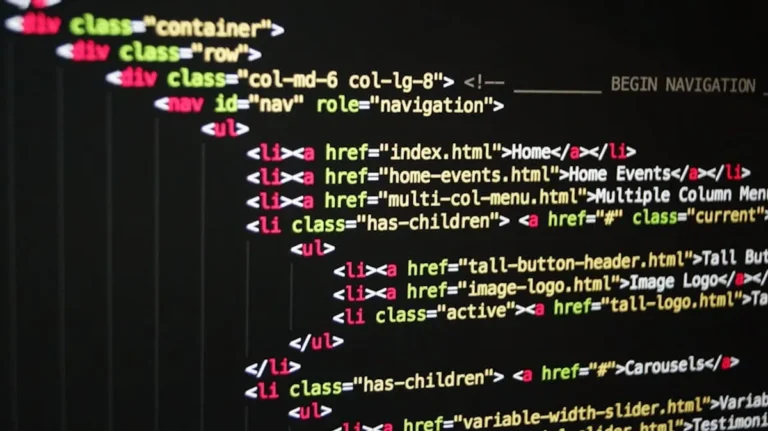

Selecting the optimal web development tools is a critical decision for any PHP developer, directly impacting project efficiency, code quality, and long-term maintainability. The landscape of available software is vast, ranging from integrated development environments (IDEs) and frameworks to testing utilities and deployment solutions. Each tool offers distinct advantages tailored to specific development paradigms, team sizes, and project complexities. Your choice should align with your project's technical requirements, your team's existing skill set, and your desired development workflow, rather than simply adopting the latest trend. This guide cuts through the noise, detailing a curated selection of essential tools that empower PHP developers to build robust, scalable web applications.
What to Look For in PHP Web Development Tools
When evaluating web development tools for PHP, prioritize functionalities that streamline your workflow and enhance code quality. A robust Integrated Development Environment (IDE) or code editor should offer intelligent code completion, real-time error checking, and integrated debugging capabilities. Frameworks should provide a structured foundation, promoting rapid development and adherence to best practices, while also offering extensibility. Consider tools that facilitate efficient package management, ensuring dependency resolution and consistent project environments. Testing frameworks are non-negotiable for maintaining code integrity and catching regressions early. Look for static analysis tools to identify potential issues before runtime and containerization solutions to standardize development, staging, and production environments. Finally, effective version control integration and database management clients are fundamental for collaborative development and data manipulation. The goal is a cohesive toolchain that reduces friction at every stage of the development lifecycle, from initial coding to deployment and maintenance.
1. PhpStorm
PhpStorm is a commercial, cross-platform IDE specifically designed for PHP and web development by JetBrains. It provides an extensive set of features that cover the entire development cycle, including intelligent code assistance, on-the-fly error prevention, and support for various PHP frameworks, front-end technologies, and database tools. Its deep understanding of PHP code structure allows for highly accurate autocompletion, refactoring capabilities, and code analysis, making it a productivity powerhouse for professional PHP developers.
Best for: Professional PHP developers working on complex, large-scale applications, especially those utilizing popular frameworks like Laravel, Symfony, or Yii.
Pros:
- Exceptional code intelligence: Context-aware autocompletion, code generation, and refactoring.
- Integrated debugging: Seamless integration with Xdebug for powerful debugging sessions.
- Comprehensive framework support: Built-in support for major PHP frameworks, including their specific CLI tools and templates.
- Front-end development features: Strong support for JavaScript, TypeScript, HTML, CSS, and related frameworks.
- Database tools: Full-featured database client for SQL editing, schema browsing, and data management.
Cons:
- Commercial license: Requires an annual subscription, which can be a barrier for individual developers or small teams.
- Resource intensive: Can consume significant RAM and CPU, especially on larger projects.
- Steep learning curve: Its vast feature set can be overwhelming for new users.
Verdict: PhpStorm sets the benchmark for PHP IDEs, offering unparalleled depth of features and intelligence. Its commercial cost is justified by the substantial productivity gains it delivers for serious PHP development, making it a worthwhile investment for professional teams.
2. VS Code
Visual Studio Code (VS Code) is a free, open-source code editor developed by Microsoft, highly extensible through a rich marketplace of extensions. While not a full-fledged IDE out of the box, its lightweight nature combined with powerful extensions transforms it into a highly capable environment for PHP development. It supports syntax highlighting, intelligent autocompletion, debugging, and Git integration, making it a popular choice for developers across various languages.
Best for: Developers seeking a fast, customizable, and free code editor that can be tailored for PHP development with community-driven extensions.
Pros:
- Free and open-source: No licensing costs, accessible to all developers.
- Highly extensible: A vast marketplace of extensions for PHP, debugging (Xdebug), linting, and framework support.
- Lightweight and fast: Offers excellent performance compared to heavier IDEs.
- Integrated Git control: Seamless version control management directly within the editor.
- Cross-platform: Available on Windows, macOS, and Linux.
Cons:
- Relies on extensions: Core PHP-specific features often require installing multiple extensions, which can sometimes lead to compatibility issues or performance degradation.
- Less "out-of-the-box" intelligence: While powerful with extensions, it doesn't have the same deep, integrated PHP understanding as dedicated IDEs like PhpStorm.
- Configuration overhead: Setting up a fully optimized PHP development environment can require more manual configuration.
Verdict: VS Code offers an exceptional balance of speed, flexibility, and cost-effectiveness. For developers willing to invest time in configuring extensions, it provides a highly productive and personalized PHP development experience, rivaling commercial IDEs in many aspects.
3. Laravel
Laravel is a free, open-source PHP web framework known for its elegant syntax, robust feature set, and developer-friendly approach. It adheres to the Model-View-Controller (MVC) architectural pattern and provides out-of-the-box solutions for common web development tasks such as routing, authentication, caching, and database interaction. Its extensive ecosystem includes official packages like Nova for administration panels, Echo for real-time events, and Horizon for queue management, significantly accelerating development cycles.
Best for: Rapid application development, building scalable web applications, RESTful APIs, and projects requiring a comprehensive, opinionated framework.
Pros:
- Expressive syntax: Clean, readable code that improves maintainability and developer experience.
- Rich feature set: Includes ORM (Eloquent), routing, authentication, queues, caching, and more.
- Vibrant ecosystem: Strong community support and a wealth of official and third-party packages.
- Excellent documentation: Comprehensive and well-maintained guides for all features.
- Artisan CLI: Powerful command-line interface for managing database migrations, running tests, and generating code.
Cons:
- Opinionated structure: Can be less flexible for projects that require highly customized architectural approaches.
- Performance overhead: While optimized, its extensive features can introduce a slight performance overhead compared to micro-frameworks.
- Learning curve: New developers need to grasp its conventions and ecosystem, which can take time.
Verdict: Laravel remains a dominant force in the PHP framework space due to its balance of power and simplicity. It's an excellent choice for projects seeking rapid development, maintainability, and access to a vast, supportive community.
4. Symfony
Symfony is a robust, highly flexible PHP web framework designed for building complex, high-performance applications. Unlike Laravel, Symfony is less opinionated, offering a collection of reusable PHP components that can be used independently or as part of the full framework. This modularity allows developers to pick and choose the features they need, making it suitable for a wide range of projects, from microservices to enterprise-level systems. Its emphasis on stability, performance, and adherence to web standards makes it a favorite for long-term projects.
Best for: Enterprise-level applications, highly customizable projects, microservices architectures, and applications where long-term stability and performance are paramount.
Pros:
- Modularity and flexibility: Components can be used independently, offering high customization.
- Performance: Optimized for speed and efficiency, especially with its full-stack framework.
- Stability and longevity: Strong backward compatibility and long-term support (LTS) releases.
- Extensive documentation: Comprehensive and detailed guides for all components and features.
- Strong community and enterprise adoption: Backed by a large community and used by major corporations.
Cons:
- Steeper learning curve: Its flexibility and component-based nature can be more challenging for beginners.
- Boilerplate code: Can require more setup and configuration compared to more opinionated frameworks.
- Less "magic": Requires developers to be more explicit in their code, which some might find less rapid than Laravel.
Verdict: Symfony is the framework of choice for developers who prioritize control, performance, and long-term maintainability. Its component-driven architecture makes it adaptable to almost any project requirement, though it demands a greater initial investment in learning.
5. Composer
Composer is the de facto dependency manager for PHP. It allows developers to declare the libraries their project depends on and manages their installation and updates. By defining dependencies in a composer.json file, Composer automatically downloads the required packages from Packagist (the main Composer repository) and ensures that all necessary files are autoloaded. This streamlines project setup, promotes code reusability, and maintains consistent development environments across teams.
Best for: Virtually all modern PHP projects, from small scripts to large frameworks, to manage external libraries and dependencies efficiently.
Pros:
- Standard for PHP dependency management: Widely adopted and integrated into most modern PHP projects and frameworks.
- Automated dependency resolution: Handles complex dependency trees and version constraints.
- Autoloading capabilities: Automatically generates an autoloader for all installed packages.
- Promotes code reusability: Encourages the use of well-tested, modular libraries.
- Consistent environments: Ensures all team members use the same versions of dependencies.
Cons:
- Can be slow: Installing or updating many dependencies can sometimes take a significant amount of time.
- Disk space usage: Each project can end up with its own copy of common libraries, increasing disk usage.
- Requires internet access: Initial installation and updates require a connection to Packagist.
Verdict: Composer is an indispensable tool for any modern PHP developer. Its ability to manage dependencies effortlessly has revolutionized PHP development, making it an essential component of any professional workflow.
6. PHPUnit
PHPUnit is the most popular unit testing framework for PHP. It provides a robust set of tools for writing and running automated tests, ensuring that individual units of code (functions, methods, classes) behave as expected. By integrating PHPUnit into the development process, developers can catch bugs early, refactor code with confidence, and maintain a high level of code quality. It supports various assertion methods, test fixtures, and data providers, making it flexible for diverse testing scenarios.
Best for: All PHP projects that prioritize code quality, maintainability, and regression prevention through automated testing.
Pros:
- Industry standard: Widely adopted and understood, making it easy to integrate into new and existing projects.
- Comprehensive features: Supports unit tests, integration tests, mock objects, and data providers.
- Detailed test reports: Provides clear output on test failures and code coverage.
- Extensible: Allows for custom assertions and test runners.
- Active development: Continuously updated and maintained by a dedicated community.
Cons:
- Learning curve: Writing effective tests requires understanding testing principles and PHPUnit's API.
- Initial setup time: Integrating and writing tests for an existing codebase can be time-consuming.
- Can be slow: Large test suites can take a long time to run, especially without proper optimization.
Verdict: PHPUnit is fundamental for building reliable PHP applications. Its adoption signifies a commitment to quality and reduces the long-term cost of maintenance, making it a non-negotiable tool for professional development.
7. Xdebug
Xdebug is a powerful debugging and profiling tool for PHP. It extends PHP's core functionality by providing detailed information about script execution, including stack traces, function call parameters, and memory usage. Its primary use case is interactive debugging, allowing developers to set breakpoints, step through code line by line, inspect variables, and evaluate expressions during runtime. Xdebug is indispensable for identifying and resolving complex bugs that are difficult to pinpoint through traditional logging or error messages.
Best for: Debugging complex PHP applications, profiling code performance, and understanding execution flow in detail.
Pros:
- Interactive debugging: Allows for real-time inspection of variables and execution flow.
- Profiling capabilities: Helps identify performance bottlenecks in code.
- Code coverage analysis: Integrates with testing frameworks like PHPUnit to report on code coverage.
- Remote debugging: Enables debugging applications running on remote servers or Docker containers.
- Detailed error reporting: Provides enhanced stack traces and error messages.
Cons:
- Performance overhead: Running Xdebug can significantly slow down PHP script execution, especially when profiling.
- Configuration complexity: Setting up Xdebug with an IDE and web server can be challenging for beginners.
- Resource usage: Can consume more memory, particularly during profiling.
Verdict: Xdebug is an essential tool for any PHP developer serious about troubleshooting and optimizing their applications. While it requires careful configuration, the insights it provides into code execution are invaluable for debugging and performance tuning.
8. Docker
Docker is a platform that uses OS-level virtualization to deliver software in packages called containers. These containers are isolated, lightweight, and include everything needed to run an application: code, runtime, system tools, libraries, and settings. For PHP developers, Docker simplifies environment setup, ensures consistency across development, testing, and production, and facilitates microservices architectures. It eliminates "it works on my machine" issues by providing a portable, reproducible environment.
Best for: Standardizing development environments, deploying microservices, ensuring environment consistency, and simplifying application scaling.
Pros:
- Environment consistency: Ensures applications run identically across all environments.
- Isolation: Containers isolate applications and their dependencies, preventing conflicts.
- Portability: Containers can be easily moved between different hosts and cloud providers.
- Rapid deployment: Speeds up deployment processes and simplifies scaling.
- Resource efficiency: Containers are more lightweight than traditional virtual machines.
Cons:
- Learning curve: Requires understanding of containerization concepts and Docker commands.
- Initial setup complexity: Configuring Docker Compose for multi-service PHP applications can be involved.
- Performance overhead: While lightweight, there can be a slight overhead compared to native execution, especially on macOS/Windows.
Verdict: Docker has become a cornerstone of modern web development. For PHP developers, it offers an unparalleled solution for managing development environments and deploying applications reliably, making it a highly recommended tool for almost any project.
9. PHPStan
PHPStan is a static analysis tool for PHP that focuses on finding bugs in your code without running it. It reads your code and, based on its type inference and analysis rules, identifies potential errors, inconsistencies, and violations of best practices. By catching issues like incorrect type hints, undefined variables, or uncalled methods early in the development cycle, PHPStan helps improve code quality, reduce runtime errors, and facilitate refactoring, especially in larger or legacy codebases.
Best for: Enhancing code quality, preventing bugs, refactoring large codebases, and enforcing strict typing in PHP projects of all sizes.
Pros:
- Early bug detection: Catches errors before runtime, saving debugging time.
- Improves code quality: Enforces type safety and best practices, leading to more robust code.
- Facilitates refactoring: Provides confidence when making changes by identifying potential breakages.
- Configurable strictness: Allows developers to choose different analysis levels, from basic checks to very strict type-checking.
- Integrates with CI/CD: Can be easily incorporated into automated build pipelines.
Cons:
- False positives: Can sometimes report issues that are not actual bugs, requiring configuration adjustments.
- Learning curve: Understanding its configuration and error messages can take time.
- Initial setup time: Integrating it into an existing project and resolving initial errors can be time-consuming.
Verdict: PHPStan is an invaluable addition to any PHP developer's toolkit. Its ability to proactively identify code issues significantly boosts code reliability and maintainability, making it a crucial tool for achieving higher quality software.
10. Postman
Postman is an API development environment that simplifies the process of building, testing, and documenting APIs. While not exclusive to PHP, it's an indispensable tool for PHP developers building RESTful APIs with frameworks like Laravel or Symfony. Postman allows sending HTTP requests, inspecting responses, managing environments (e.g., development, staging), and organizing requests into collections. Its intuitive graphical interface and collaborative features make API testing and development more efficient.
Best for: Developing, testing, and documenting RESTful APIs built with PHP, and for collaborating on API specifications within a team.
Pros:
- Intuitive UI: Easy to use for sending requests and inspecting responses.
- Collection management: Organize API requests, tests, and documentation.
- Environment variables: Manage different configurations for development, staging, and production.
- Automated testing: Write test scripts to validate API responses.
- Collaboration features: Share collections and collaborate with team members.
Cons:
- Can be resource-intensive: The desktop application can consume significant memory.
- Learning curve for advanced features: Utilizing scripting and advanced testing capabilities requires some effort.
- Cloud reliance for collaboration: Advanced collaboration features often require a Postman account and cloud synchronization.
Verdict: Postman is a fundamental tool for any PHP developer working with APIs. Its comprehensive features streamline API development and testing, ensuring that your PHP-powered backends are robust and reliable.
11. DBeaver
DBeaver is a free, open-source universal database tool for developers and database administrators. It supports a wide array of databases, including MySQL, PostgreSQL, SQLite, Oracle, and SQL Server, all commonly used with PHP applications. DBeaver provides a powerful graphical interface for database management, including SQL query execution, schema browsing, data editing, and import/export functionalities. Its unified interface across different database types simplifies database interaction for PHP developers working with diverse data storage solutions.
Best for: PHP developers needing a versatile, cross-database GUI tool for managing databases, executing queries, and inspecting data.
Pros:
- Universal database support: Connects to almost any relational or NoSQL database.
- Feature-rich GUI: Provides comprehensive tools for SQL editing, data manipulation, and schema management.
- Free and open-source: No licensing costs for the community edition.
- Extensible: Supports plugins for additional functionality.
- Cross-platform: Available on Windows, macOS, and Linux.
Cons:
- Can be resource-intensive: Like many GUI database tools, it can consume a fair amount of system resources.
- Steeper learning curve for advanced features: Its extensive functionality can be overwhelming for new users.
- Interface can feel cluttered: The abundance of options might make the UI less intuitive for some.
Verdict: DBeaver is an excellent, cost-effective choice for PHP developers who regularly interact with multiple database systems. Its universal compatibility and comprehensive feature set make it a powerful asset for database management tasks.
12. Jenkins
Jenkins is a free, open-source automation server that facilitates Continuous Integration (CI) and Continuous Delivery (CD). For PHP projects, Jenkins can automate the entire build, test, and deployment process. It monitors version control systems for changes, triggers builds, runs PHPUnit tests, performs static analysis with tools like PHPStan, and deploys the application to staging or production environments. By automating these repetitive tasks, Jenkins helps teams deliver software faster and more reliably while maintaining code quality.
Best for: Automating build, test, and deployment pipelines for PHP projects, especially in team environments requiring continuous integration and delivery.