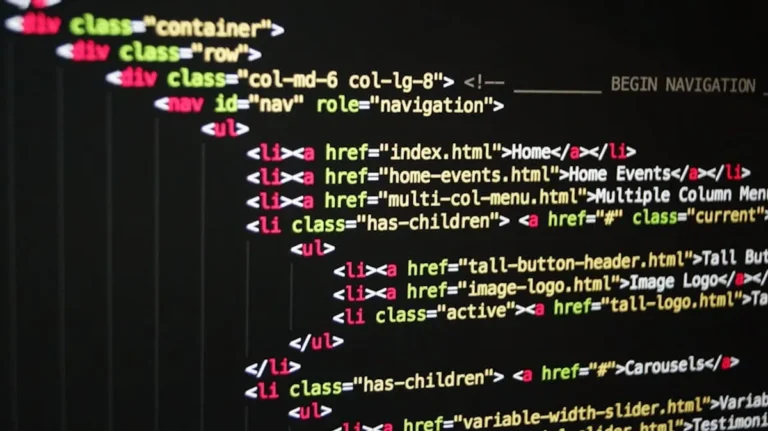

Deciding between PHP and JavaScript for a web development project requires a clear understanding of each language's primary strengths, typical use cases, and ecosystem. While both are fundamental to modern web applications, they excel in different areas and often complement each other. The choice impacts development speed, scalability, team expertise requirements, and long-term maintenance, making it a critical commercial decision for any project owner or agency.
PHP: The Server-Side Foundation
PHP, primarily a server-side scripting language, processes data on the web server before sending HTML to the client's browser. It's a mature technology, powering a significant portion of the internet's dynamic websites, particularly those built on content management systems.
PHP's core strength lies in its robust backend capabilities. It excels at database interaction, handling form submissions, managing sessions, and generating dynamic HTML. Its extensive function library and established frameworks streamline common web development tasks, leading to efficient development cycles for many types of applications.
Key Strengths:
- Maturity and Ecosystem: A vast, well-documented ecosystem with decades of development, including powerful frameworks like Laravel and Symfony, and the dominant WordPress CMS. This provides extensive resources, plugins, and community support.
- Database Integration: Excellent native support for various databases, especially MySQL, PostgreSQL, and SQLite, simplifying data management for complex applications.
- Performance: Recent versions (PHP 8+) have introduced significant performance improvements, including JIT compilation, making it competitive for many server-side workloads.
- Deployment Ease: Generally straightforward to deploy on most web servers with readily available hosting environments, reducing setup complexity.
Best for: Content management systems, e-commerce platforms, backend APIs, traditional server-rendered web applications, and projects requiring rapid development with established frameworks.
JavaScript: The Universal Language of the Web
JavaScript began as a client-side scripting language, enabling interactive elements directly within web browsers. Its evolution, particularly with the advent of Node.js, transformed it into a full-stack language capable of both frontend and backend development.
On the frontend, JavaScript is indispensable for creating dynamic, responsive user interfaces. With frameworks like React, Angular, and Vue, it facilitates single-page applications (SPAs) that offer desktop-like user experiences. On the backend, Node.js allows JavaScript to handle server-side logic, database interactions, and API development, often leveraging its asynchronous, non-blocking I/O model for high concurrency.
Key Strengths:
- Client-Side Interactivity: Unrivaled for creating dynamic and engaging user experiences directly in the browser, reducing server load and improving responsiveness.
- Full-Stack Development: Node.js enables developers to use a single language across the entire application stack, streamlining development and potentially reducing context switching for teams.
- Rich Ecosystem: A rapidly evolving landscape of frameworks and libraries for both frontend (React, Angular, Vue) and backend (Express.js, Next.js), catering to diverse project needs.
- Asynchronous Operations: Its event-driven, non-blocking architecture is highly efficient for I/O-bound tasks, making it suitable for real-time applications and APIs handling many concurrent connections.
Best for: Single-page applications (SPAs), real-time chat applications, interactive dashboards, mobile applications (via React Native), microservices, and unified full-stack development teams.
Key Differentiators and Overlap
While both languages are crucial for web development, their fundamental operational models and primary strengths diverge:
Execution Environment
PHP traditionally executes entirely on the server. The server processes PHP code, generates HTML, and sends the final output to the browser. JavaScript, conversely, primarily executes in the client's browser for frontend tasks. With Node.js, JavaScript also runs on the server, blurring this distinction, but its client-side dominance remains a key differentiator.
Concurrency Model
PHP typically operates with a synchronous, blocking model, where each request is processed sequentially. While modern PHP (FPM, Swoole) offers asynchronous capabilities, JavaScript's Node.js was built from the ground up with an asynchronous, event-driven, non-blocking I/O model, making it inherently efficient for handling many concurrent connections, particularly for I/O-bound operations.
Ecosystem and Community
PHP's ecosystem is characterized by its stability, large installed base (especially WordPress), and mature, battle-tested frameworks. JavaScript's ecosystem is known for its rapid innovation, vast number of libraries, and strong community support across both frontend and backend domains, though this rapid evolution can sometimes lead to framework fatigue.
Learning Curve
PHP is often considered more straightforward for beginners to pick up for basic web development tasks due to its simpler syntax and direct server-side execution. JavaScript, especially when delving into its asynchronous nature, frontend frameworks, and full-stack implementation, can present a steeper learning curve for newcomers aiming for comprehensive web application development.
Pro Tip: Do not choose a language based solely on perceived popularity or raw performance benchmarks. Evaluate the specific requirements of your project: database complexity, real-time needs, user interface interactivity, existing team skill sets, and long-term maintenance considerations. A language that is 'faster' on paper may be slower to develop or maintain if it doesn't align with your project's core needs or your team's expertise.
When to Opt for PHP
Consider PHP when your project aligns with these characteristics:
- You require a robust, proven backend for a content-heavy website or e-commerce store.
- Your team has strong existing PHP expertise, or you need to integrate with an established PHP codebase (e.g., maintaining a WordPress site).
- Rapid development and deployment are critical, leveraging mature frameworks like Laravel for quick setup and feature implementation.
- The application primarily involves server-side rendering and database interactions without extensive client-side interactivity.
- Hosting and infrastructure costs need to be minimized, as PHP hosting is widely available and often more economical for standard setups.
When to Opt for JavaScript (Full-Stack with Node.js)
Choose JavaScript for full-stack development when:
- The application demands a highly interactive, dynamic user interface with real-time updates (e.g., live dashboards, chat applications).
- You aim for a unified language stack across both frontend and backend, simplifying developer onboarding and code sharing.
- Scalability for I/O-bound operations and handling numerous concurrent connections is a primary concern.
- The project involves building microservices or APIs that need to be highly performant and flexible.
- Developing cross-platform desktop or mobile applications (using Electron or React Native) alongside the web application is a goal.
The Hybrid Approach: Leveraging Both Strengths
It's increasingly common and often optimal to use PHP and JavaScript together. A typical setup involves PHP handling the backend logic, database management, and API endpoints, while JavaScript (with a frontend framework like React or Vue) manages the client-side user interface. This architecture allows each language to play to its strengths: PHP for robust server-side operations and JavaScript for rich, interactive user experiences. This hybrid model provides flexibility, scalability, and access to the best tools from both ecosystems, offering a balanced solution for complex web applications.
Making the Right Technology Decision
The decision between PHP and JavaScript, or a combination of both, is not about which language is inherently "better," but which is the most appropriate tool for the specific job. Evaluate your project's functional and non-functional requirements, consider the long-term maintenance implications, and assess your team's current skill set and hiring potential. A well-informed choice will lead to a more efficient development process, a more scalable product, and a lower total cost of ownership over the application's lifecycle.
Frequently Asked Questions
Can PHP and JavaScript work together in a single project?
Yes, absolutely. This is a very common and effective approach. PHP can power the backend (handling databases, APIs, server-side logic), while JavaScript handles the frontend (user interface, interactivity) within the client's browser, often communicating with the PHP backend via RESTful APIs.
Is one language "better" than the other for web development?
Neither PHP nor JavaScript is universally "better." Each excels in different scenarios. PHP is often preferred for traditional server-rendered applications, CMS, and e-commerce, while JavaScript (especially with Node.js) shines in highly interactive frontends, real-time applications, and full-stack development with a unified language.
Which language is easier for a beginner to learn for web development?
For basic server-side scripting and dynamic HTML generation, PHP can often feel more straightforward for beginners due to its direct approach. However, for interactive frontend development, JavaScript is essential. Learning both is beneficial for a comprehensive understanding of modern web development.
What are the primary performance differences between PHP and Node.js (JavaScript)?
Modern PHP (version 8+) with JIT compilation offers significant performance improvements for CPU-bound tasks. Node.js, built on Chrome's V8 engine, is highly efficient for I/O-bound tasks due to its asynchronous, non-blocking architecture, making it excellent for real-time applications and APIs handling many concurrent connections.