
Snapchat's Solar System feature offers a unique, gamified visualization of friendships, ranking connections based on interaction frequency and depth. For many users, this system provides a clear, if sometimes abstract, metric of their closest social bonds within the platform. However, its specific design and integration within Snapchat mean that users seeking different approaches to managing, visualizing, or simply interacting with their core social circle often look elsewhere. The decision to explore alternatives typically stems from a need for greater privacy controls, more direct communication tools, broader platform compatibility, or a desire for different forms of social interaction that prioritize authenticity or specific community building over a ranking system.
This guide examines the mechanics and utility of Snapchat's Solar System, then provides a detailed analysis of viable alternatives. The focus remains on platforms and features that facilitate close social connections, offer distinct communication methods, or provide different ways to understand and manage one's digital relationships, addressing the diverse needs that the Solar System feature might not fully satisfy.
Understanding Snapchat Solar System
The Snapchat Solar System is a proprietary feature designed to represent the hierarchy and closeness of a user's friendships within the app. It assigns each friend a "planet" in a metaphorical solar system, with the user at the center as the "Sun." The proximity and type of planet assigned to a friend indicate their level of interaction and closeness, adding a layer of gamification to social engagement.
What it is
At its core, the Solar System is a visual ranking mechanism. It's not a standalone application but an integrated part of Snapchat's friend profile system. When a user views a friend's profile, they might see a small planet icon next to their name. This icon signifies the friend's position within the user's personal solar system, indicating how close Snapchat perceives that friendship to be based on shared activity.
How it works
The system operates on a tiered structure, assigning different celestial bodies to friends based on interaction levels. The "closest" friends are Mercury, followed by Venus, Earth, Mars, Jupiter, Saturn, Uranus, and Neptune, in order of decreasing closeness. Pluto, once a planet, is often used to represent a friend who was once close but has since drifted further away in terms of interaction. These designations are dynamic, shifting as interaction patterns change. Snapchat's algorithm considers various factors, including direct Snaps, Chats, Story views, and shared activity, to determine these rankings. The system is entirely private to each user; only you see your friends' planetary assignments relative to you, and they see theirs relative to them.
Key Features
- Visual Hierarchy: Friends are assigned planets (Mercury to Neptune) orbiting the user (Sun), indicating closeness.
- Dynamic Ranking: Planet assignments change based on ongoing interaction, reflecting real-time engagement.
- Gamified Engagement: Encourages users to maintain streaks and active communication to keep "close" friends in inner orbits.
- Private Display: Rankings are personal and not publicly visible, offering a private insight into friendship dynamics.
Primary Uses
The Snapchat Solar System primarily serves as a social engagement tool and a visual representation of a user's most active connections. It helps users quickly identify who they interact with most frequently on Snapchat. For some, it acts as a fun, competitive element, encouraging consistent interaction to maintain "inner planet" status. It also provides a quick, at-a-glance overview of one's closest social circle within the app, potentially influencing who a user sends Snaps to or engages with most often.
What to Look For in an Alternative
When seeking alternatives to the Snapchat Solar System, consider platforms or features that address specific needs related to social connection, privacy, and communication. The ideal choice depends on whether the primary goal is enhanced group communication, more granular privacy controls, different forms of content sharing, or a simpler, less gamified approach to managing relationships.
- Communication Focus: Evaluate if the alternative prioritizes instant messaging, voice/video calls, or group discussions. Some users prefer direct, private conversations over broadcast content.
- Privacy Controls: Look for robust settings that allow users to control who sees their content, location, or activity. Granular controls are essential for maintaining personal boundaries.
- Relationship Visualization/Management: While few platforms replicate the Solar System's visual ranking, consider apps that offer strong friend list organization, custom groups, or "close friends" features for curated sharing.
- Content Sharing Options: Assess the types of media supported (photos, videos, long-form text, documents) and the ephemeral nature of content. Some users prefer permanent archives, others temporary sharing.
- Community Building Tools: For those managing larger friend groups or specific interest communities, features like channels, forums, or extensive moderation tools become critical.
- Platform Accessibility: Consider if the alternative is available on all necessary devices (mobile, desktop) and its ease of use across different operating systems.
Alternatives to Snapchat Solar System
1. WhatsApp
WhatsApp is a globally dominant messaging application known for its end-to-end encryption and focus on private, direct communication. While it lacks a gamified system for ranking friendships, it excels in facilitating close-knit group interactions and secure one-on-one chats. Its strength lies in its ubiquity and reliability as a primary communication channel for friends and family, often serving as the default for coordinating plans and sharing updates within established social circles.
Key Features: End-to-end encrypted messaging, voice and video calls, group chats with extensive administrative controls, status updates (ephemeral content similar to stories), document sharing, and location sharing.
Pricing: Free to use for personal communication, with business-focused APIs available for commercial entities.
Best For: Users prioritizing secure, private communication within established friend groups and family circles, especially for coordinating events and sharing practical information.
Pros:
- Widespread adoption ensures most contacts are accessible.
- Strong encryption provides a high level of privacy for conversations.
- Robust group chat features support active community management.
- Reliable for international communication, reducing SMS costs.
Cons:
- Lacks any visual or gamified representation of friendship closeness.
- Owned by Meta, which raises privacy concerns for some users despite encryption.
- Less focused on ephemeral, creative content sharing compared to Snapchat.
2. Telegram
Telegram positions itself as a secure, cloud-based messaging platform emphasizing speed and privacy. It offers a rich feature set for both individual and group communication, including large group capacities and channels for broadcasting messages to wider audiences. While it doesn't rank friendships, its extensive customization options for chats and its focus on secure, feature-rich communication make it a strong contender for managing specific social dynamics, particularly for users who value control over their data and communication environment.
Key Features: End-to-end encrypted secret chats, cloud-based chat history, channels for broadcasting, supergroups with up to 200,000 members, voice chats, custom themes, and self-destructing messages.
Pricing: Free to use, with an optional Telegram Premium subscription offering additional features like increased upload limits and exclusive stickers.
Best For: Privacy-conscious users and those managing large online communities or interest-based groups who require advanced messaging features and robust administrative tools.
Pros:
- High level of privacy and security features, including secret chats.
- Supports very large groups and public/private channels, ideal for community building.
- Cloud-based storage allows access to chat history across multiple devices.
- Frequent updates introduce new features and improvements.
Cons:
- Not as universally adopted as WhatsApp in some regions, potentially limiting contact reach.
- The default chats are not end-to-end encrypted, requiring users to opt into "secret chats."
- Interface can feel less intuitive for new users accustomed to simpler messaging apps.
3. Discord
Originally designed for gamers, Discord has evolved into a versatile platform for building and managing communities around shared interests. Its server-based structure allows for highly organized friend groups, complete with distinct text and voice channels for different topics or activities. While it doesn't visualize friendship closeness in a Solar System manner, it offers robust tools for creating dedicated spaces where close friends can interact, collaborate, and share content in a structured environment. Friend requests and direct messages facilitate one-on-one connections within this broader community framework.
Key Features: Servers with customizable roles and permissions, text and voice channels, direct messaging, video calls, screen sharing, integrations with other services, and a robust bot ecosystem for automation.
Pricing: Free to use, with an optional Nitro subscription offering enhanced features like custom emojis, higher quality streaming, and larger upload limits.
Best For: Users who want to build and manage structured communities with close friends, particularly for shared hobbies, gaming, or collaborative projects requiring voice communication.
Pros:
- Excellent for creating organized, topic-specific group communication.
- Superior voice chat quality and functionality for real-time interaction.
- Customizable server roles and permissions offer fine-grained control over access.
- Strong community features that foster engagement beyond simple messaging.
Cons:
- Can have a steeper learning curve for users unfamiliar with server-based platforms.
- Primary focus is on community and group interaction, less on individual friendship metrics.
- Discovery of new friends or casual social browsing is not its main strength.
4. Instagram
Instagram, while primarily a visual content-sharing platform, offers features that cater to managing closer social circles, particularly through its "Close Friends" list for Stories. This allows users to curate content specifically for a select group, mimicking the intent behind the Solar System's focus on intimate connections. It doesn't offer a direct friendship ranking, but its emphasis on visual sharing and direct messaging (DMs) makes it a relevant alternative for those who communicate through images and short videos with their core network.
Key Features: Photo and video sharing (feed, Stories, Reels), Direct Messaging (DMs), "Close Friends" list for private Story sharing, live video, and group chat functionality.
Pricing: Free to use, with advertising integrated into the user experience.
Best For: Users who primarily share visual content and want to selectively share more personal moments with a curated group of close friends, leveraging a widely adopted social network.
Pros:
- Large user base facilitates connection with a wide network.
- "Close Friends" feature allows for private, curated content sharing.
- Strong visual focus for expressing creativity and sharing experiences.
- Integrated DMs for private conversations with connections.
Cons:
- Lacks any explicit friendship ranking or visualization system.
- Owned by Meta, which has implications for data privacy and algorithmic content delivery.
- Can be overwhelming with public content and advertising, detracting from close-friend interactions.
5. Google Maps
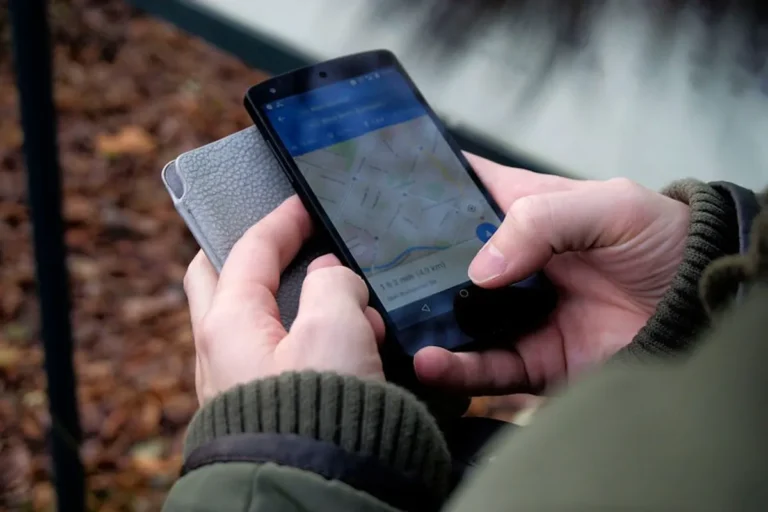
While not a social media app in the traditional sense, Google Maps offers a robust "Location Sharing" feature that provides a practical, real-time visualization of where close friends and family are. This serves a different but related purpose to the Solar System: understanding the physical proximity and activity of one's inner circle. For coordinating meetups, ensuring safety, or simply feeling connected to the physical whereabouts of loved ones, it offers a functional alternative to abstract friendship rankings by providing concrete, actionable information.
Key Features: Real-time location sharing with customizable duration, location history, navigation, local business discovery, and public transit information.
Pricing: Free to use, integrated into the broader Google ecosystem.
Best For: Users who prioritize real-time location awareness for coordinating with close friends and family, ensuring safety, or facilitating in-person meetups.
Pros:
- Provides highly practical, real-time information about friends' physical locations.
- Integrates seamlessly with navigation and local search features.
- Granular control over who sees your location and for how long.
- Widely adopted and reliable for mapping and location services.
Cons:
- Does not offer any social interaction or communication tools beyond location sharing.
- Lacks any form of friendship ranking or relationship visualization.
- Privacy concerns for some users regarding constant location tracking.
6. BeReal
BeReal distinguishes itself by promoting authenticity and spontaneity in social sharing. Users receive a daily notification to capture and share a photo within a two-minute window, simultaneously using both front and back cameras. This content is primarily shared with a user's "My Friends" list, fostering a sense of shared, unedited reality among a close circle. It offers no explicit friendship ranking, but its design inherently encourages engagement with a core group of friends, focusing on genuine, unfiltered moments rather than curated perfection or gamified interactions.
Key Features: Daily synchronized photo prompts, dual-camera capture, "My Friends" feed for close connections, "Discovery" feed for public content, and RealMojis (custom emoji reactions).
Pricing: Free to use.
Best For: Users seeking a more authentic and less curated social sharing experience with a close circle of friends, prioritizing spontaneity over polished content or complex social metrics.
Pros:
- Promotes authenticity and reduces pressure for curated content.
- Focuses interaction on a core group of friends, limiting broader social anxiety.
- Daily prompt creates a shared, timely experience among users.
- Simple interface and limited features keep the focus on genuine connection.
Cons:
- Lacks any form of friendship ranking or relationship visualization.
- Limited functionality beyond the daily photo sharing, which may not satisfy all communication needs.
- Dependence on a single daily prompt can feel restrictive for some users.
7. Locket Widget
Locket Widget offers a unique approach to connecting with close friends by displaying live photos from them directly on a user's home screen widget. It's designed for intimate, spontaneous photo sharing with a very small, trusted group. There's no complex social graph or ranking system; instead, it provides a direct, ambient connection to a handful of chosen contacts. This simplicity and directness make it a compelling alternative for those who value subtle, visual updates from their absolute closest connections without the overhead of a full social media platform.
Key Features: Live photo sharing to home screen widgets, limited friend list (typically up to 20), direct photo reactions, and a history of shared Lockets.
Pricing: Free to use.
Best For: Users who want a minimalist, intimate way to share spontaneous photos with a very small, trusted circle of close friends or family, directly on their device's home screen.
Pros:
- Extremely personal and intimate way to share moments with close friends.
- Eliminates the need to open an app to see updates from core connections.
- Simple, intuitive interface with a clear, focused purpose.
- Reduces social media noise by limiting interactions to a select few.
Cons:
- Very limited functionality beyond photo sharing to widgets.
- Not suitable for broader social interaction or large group communication.
- Lacks any form of friendship ranking or advanced social features.
How to Choose the Right Alternative
Selecting the optimal alternative to Snapchat's Solar System depends on identifying the core need that the Solar System attempted to address for you, and where it fell short. If the primary interest was in understanding who your most active connections are, and you seek a more direct communication method, WhatsApp or Telegram offer robust, private messaging for established groups. For those who value a structured environment for shared interests and real-time interaction with a core group, Discord provides unparalleled community management tools. If visual sharing with a curated audience is paramount, Instagram's "Close Friends" feature offers a flexible solution. For practical, real-world coordination, Google Maps' location sharing is invaluable. Finally, for an emphasis on authenticity and spontaneous sharing within a very close circle, BeReal or Locket Widget provide unique, minimalist experiences that strip away the complexities of traditional social networks, focusing purely on genuine connection without the gamified metrics.
FAQ
Q: Is the Snapchat Solar System accurate in ranking friendships?
A: The Snapchat Solar System's accuracy is based on an internal algorithm that measures interaction frequency and depth within the Snapchat app itself. It reflects your engagement within that specific platform, not necessarily the overall strength or importance of a friendship in real life or across other communication channels.
Q: Can I turn off the Solar System feature on Snapchat?
A: No, the Snapchat Solar System is an integrated feature of the app and cannot be individually turned off or customized by users. It appears automatically on friend profiles if you and your friend are part of each other's "best friends" list according to Snapchat's internal metrics.
Q: Do other people see my Solar System rankings?
A: No, your personal Solar System rankings are private to you. Only you can see which planet your friends are assigned in your system, and they see their own unique rankings relative to their connections. There is no public display of these friendship tiers.
Q: Are there any apps that directly replicate the Snapchat Solar System's ranking?
A: No, there are no direct, widely adopted third-party applications that precisely replicate Snapchat's proprietary Solar System ranking algorithm and visual representation. Alternatives tend to focus on different aspects of social connection, such as private messaging, group management, or location sharing, rather than a gamified friendship hierarchy.
Q: What are the main reasons users seek alternatives to the Solar System feature?
A: Users typically seek alternatives for several reasons: a desire for more robust privacy controls, a need for different communication tools (e.g., long-form text, voice chat), a preference for less gamified or more authentic social interactions, or simply to manage friendships on platforms where their primary social circle already resides.